
This guide shows how to construct a simple fire alarm using a bimetallic strip. This model can be used to show the properties of the bimetallic strip as well as demonstrating a practical use for it. The apparatus is arranged in such a way that it forms a series circuit. As the strip is heated, it bends and makes contact with the copper strip, completing the circuit. This makes the buzzer sound. Although this model is simplistic in design, some fire alarm modules are very similar in construction.
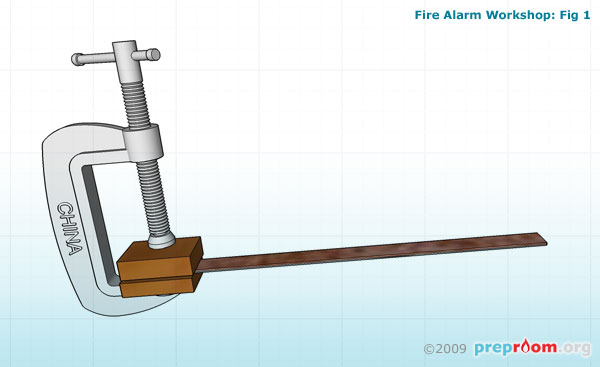
Fig 1 shows the bimetallic strip held firmly in a 'G' clamp. You may want to use two small wooden blocks to hold the strip in place because they help hold the strip in position as the screw thread is tightened.
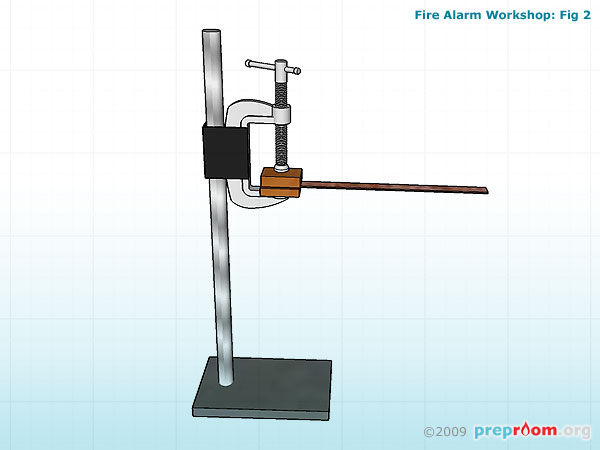
Fig 2 shows the clamp attached to a stand. Use electrical tape to join the two. The height of the bimetallic strip depends upon how you wish to heat it. If a Bunsen burner is to be used, place a heat resistant mat beneath it and ensure that the strip is about 6-9cm above the top of the burner. Likewise if a candle is to be used, ensure there is enough clearance between flame and strip.
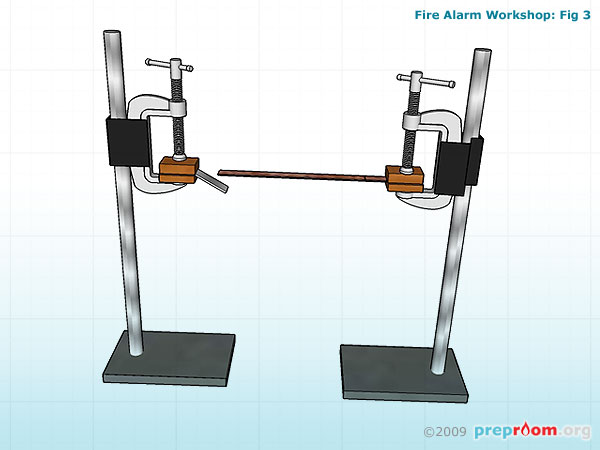
Fig 3 shows the other stand. In this 'G' clamp, fix a short length of copper strip. This will act as a contact which the bimetallic strip will touch. Before fixing this contact in place, make sure you know which way the bimetallic strip will bend when heated. The contact should be placed accordingly, either above or below the bimetallic strip.
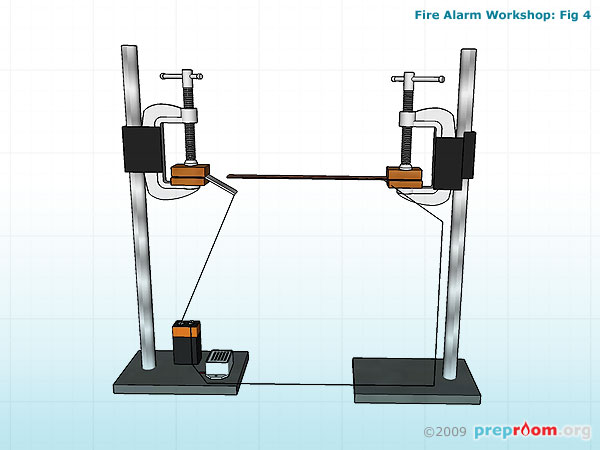
Fig 4 shows the completed model. Use crocodile clips to attach lengths of insulated copper wire or lab pack leads to the rest of the circuit. If using a battery, ensure that the voltage matches that required by the buzzer. Connect the wire from the bimetallic strip to one terminal of the buzzer. The other terminal of the buzzer is connected to one battery terminal. The remaining battery terminal is connected to the copper contact on the other stand. When the bimetallic strip is heated it should bend far enough to make contact with the copper strip. This will complete the circuit, sounding the buzzer.
The bimetallic strip may remain hot long after use and be aware of the hazards involved in using a Bunsen burner or candle.